Here lie the remains of Elizabeth Oakes Smith and her husband, Seba Smith
Read about their lives below, and explore the life of Elizabeth Oakes Smith in more detail here.
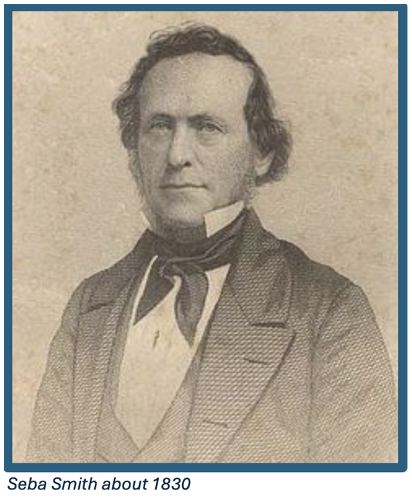
SEBA SMITH (1792-1868)
Seba Smith was born in a log cabin September 14, 1792 in Buckfield, Oxford County, then part of the state of Massachusetts. His father was also named Seba Smith, his mother Appiah Stevens. By 1800, his family had moved to Cumberland County, to the town of Bridgeton, forty miles east of Portland. According to a brief autobiography he wrote for his 40th college reunion, “from the age of twelve to twenty, he was employed at manual labor, on a farm, in a grocery store, in a brickyard, and in a cast iron foundry.”
Living on a farm, and needed for manual labor during the season, Smith’s early education was limited to some months at the common schools in the area each winter. By his own application to study, however, he began teaching in the district schools around the age of eighteen. A college preparatory school was established in Bridgeton around this time, and with the tutoring of its headmaster, Bezaleel Cushman, and the support of a benefactor in Portland to afford tuition, Smith entered Bowdoin College as a sophomore in September 1815. Smith graduated in 1818 as valedictorian in a class of twenty-one, asking in his oration on September 2, “Are we never to be allowed to deviate from the beaten path of those who precede us?”
After graduation, Smith taught school for a year in Portland and then traveled for health reasons—first down the eastern seaboard as far as South Carolina (largely on foot) and then later on shipboard to Liverpool, England. Having contributed some poetry to The Eastern Argus of Portland after college that proved popular, it seemed providential to him on his return to Maine to discover that the owner of The Argus had died, and he inquired with the journeyman printer then running the paper about a position as assistant editor under Judge Ashur Ware. Within a year, he owned half the paper and was installed as editor.
Evidence of how Seba Smith first met his future wife Elizabeth Oakes Smith has not yet been found, but they were married on March 7, 1823, at the home of Lemuel and Sophia Blanchard Sawyer, her mother and stepfather. For nearly three years, Smith remained in his post as editor of the Argus, publishing enough provocative political opinion to be challenged to a duel and caned in the streets of Portland in August of 1824 by James Parker Vance, a rival editor who was a member of Smith’s own class at Bowdoin.
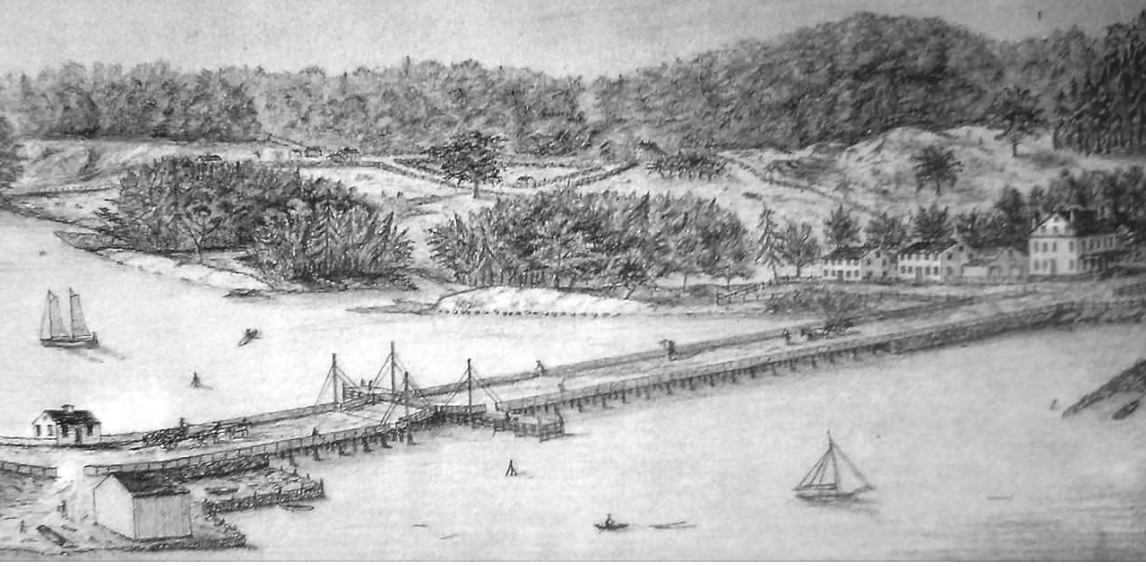
In 1826, Smith left the Argus and the couple moved to a house in Westbrook, across Tukey’s bridge from Portland. Though old and “leaky” according to Elizabeth Oakes Smith later in life, the home was large enough to accommodate their three sons at that time (Rolvin (1825-1832), Appleton (1826-1887), and Sidney (1830-1865) along with at least one servant and a variety of boarders. Theirs was the first house across the bridge, visible in this engraved drawing from the period:
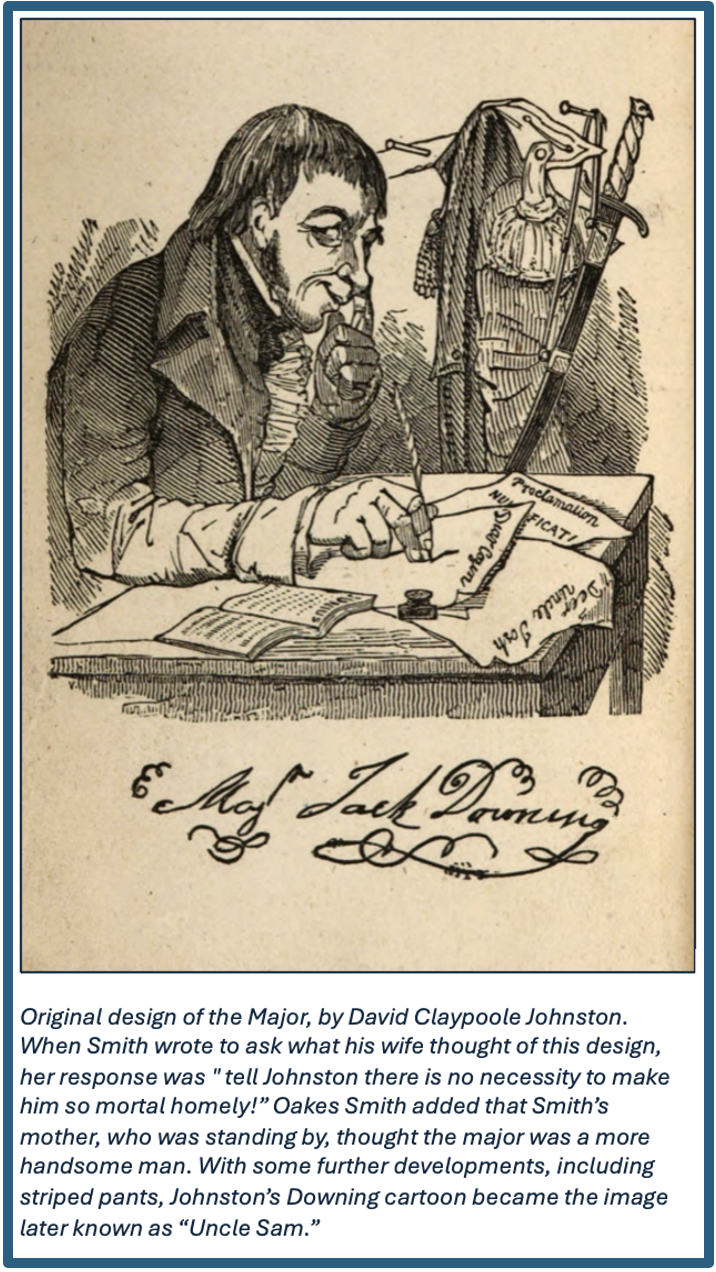
In January 1830, Smith launched the Portland Daily Courier, the first daily paper published north of Boston. About the same time, Smith began publishing a series of political satire, featuring his invented character Major Jack Downing and Downing’s various family members, some of whom were rumored to be his wife’s invention.[1] Wandering from “Downingville” into the city of Portland with “a load of ax-handles and a cheese,” Downing begins writing about the “queer things he hears in the legislature,” which leads to his ambition to seek office. While Smith’s points were subtle and carefully critical of all political factions, the target of the early Downing letters was President Jackson and a system of political preferments in which a shrewd but unlettered man like “the Major” might rise overnight to an advisory position so close to the Presidency and even run for President himself on questionable “military” credentials.
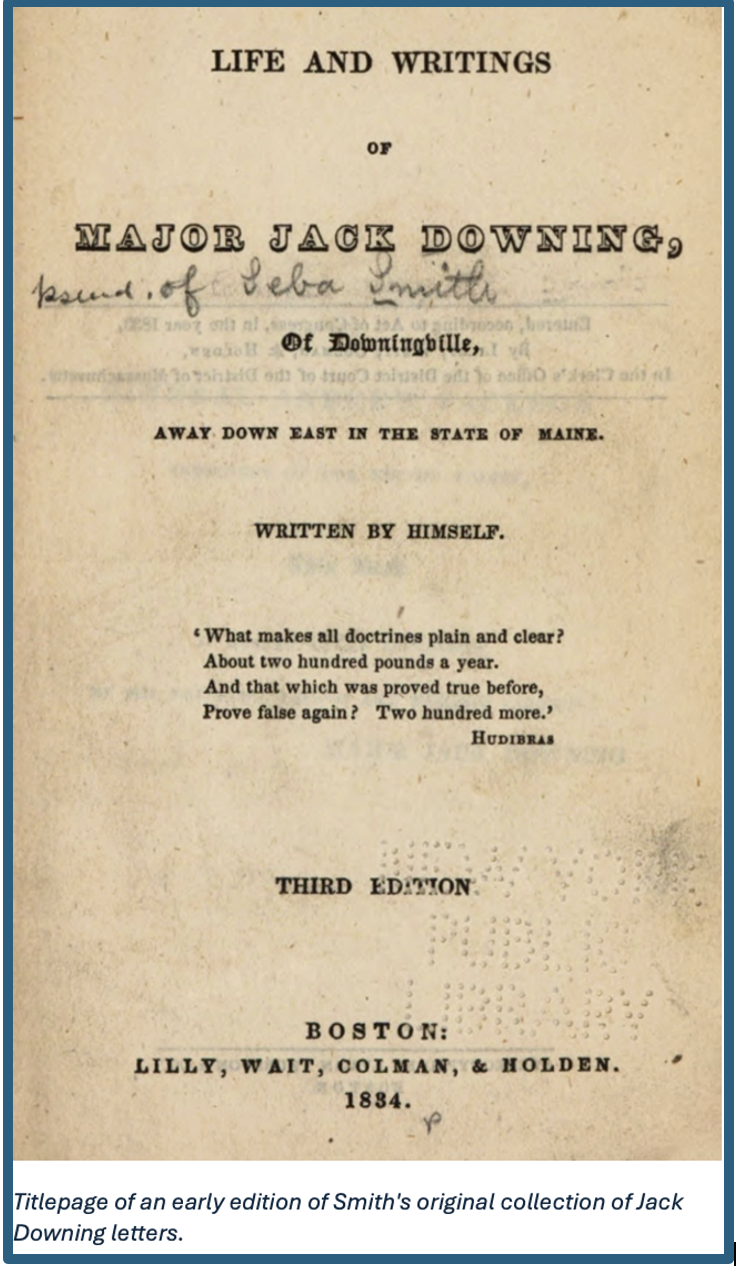
In much the same way that Elizabeth Oakes Smith was early identified with the character “Eva” from “The Sinless Child,” Smith was often referred to casually as “Jack Downing,” both in the United States and abroad. At a political meeting Smith attended in the fall of 1833 in Boston, where he was working the pages of his first collection of Downing letters through the press, he was greeted and praised by the Whig Presidential candidate Henry Clay, who had just been defeated by incumbent Andrew Jackson, and became the celebrity of the
evening.[2]
In the mid-1830s, Smith speculated in land development northwest of Bangor, near the villages of Monson, Sebec, and Foxcroft, a range marked as “No. 8” in that quadrant of the state. When credit contracted sharply and many banks failed during the Panic of 1837, the land Smith had purchased became all but worthless, and he was soon forced to sell The Courier at a loss. The family moved in with Smith’s family in Booth Bay for nearly a year, where he completed a novel titled “Esther Wylie” which was never published, and part of his epic poem, Powhatan: A Metrical Romance in Seven Cantos (1841).
In an attempt to recover his fortunes, Smith invested in a machine invented by his brother-in-law designed to separate seed from cotton. In the fall of 1838, he moved with his family, to Charleston, South Carolina to market the machine to plantation owners, but to no avail, and by January 1839, they had returned north and settled with cousins of Elizabeth Oakes Smith in New York City to again make their living as professional writers.
With four sons under the age of ten, boarding in a strange city, Smith and his wife had hit something like bottom, but they soon found opportunities to write for pay, many times for the same publications: Godey’s Ladies Book, Graham’s Magazine, Snowdon’s Ladies Companion, The New World and many others. From 1842 to 1844, Smith edited a weekly miscellany titled The Rover (1843-1845), which featured a new series of Jack Downing letters, the work of the young Walt Whitman, and if not the work of Poe, an article entitled “The Life-Preserving Coffin” (1844). which may well have inspired Poe’s “The Premature Burial.” J.N. Reynolds “Mocha Dick; of the Pacific” was also published in The Rover in 1844, long identified as an inspiration for Melville’s Moby Dick. Later in the decade he served as editor of the organ of New York City government, The Daily American Republican, along with a weekly, Bunker Hill.
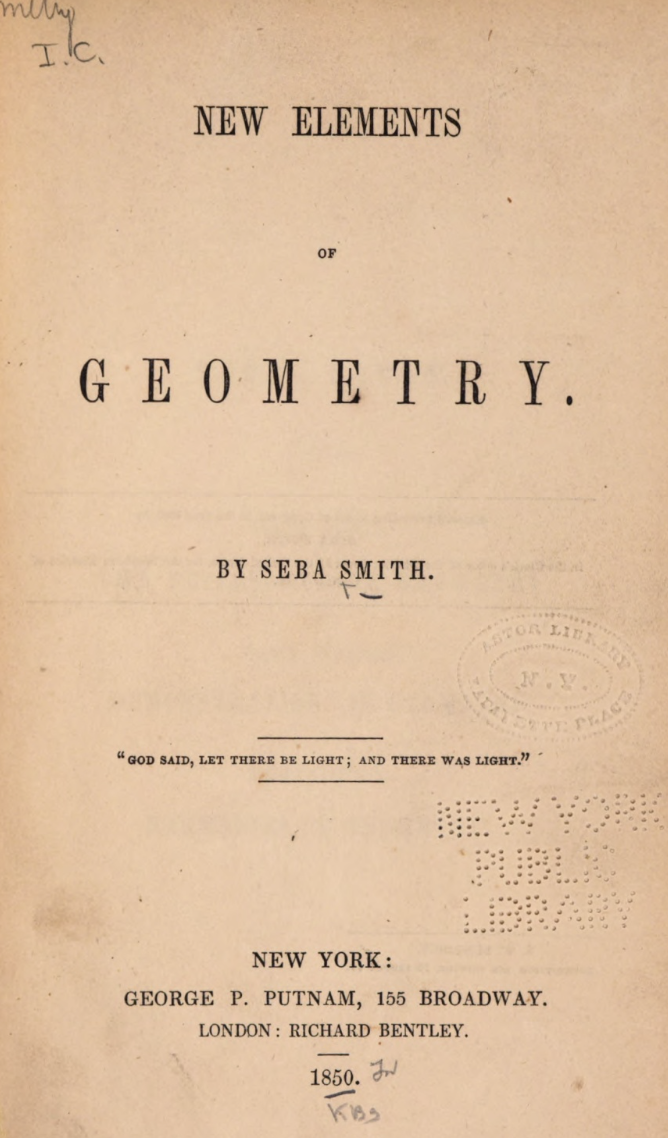
In the last years of the 40s decade Smith set aside literary work to pursue mathematics, a passion since his college days. After nearly three years of study, he published New Elements of Geometry (1850) in New York and London, a volume of 200 pages arguing a materialist theory of numbers and forms. In his autobiography of 1858, he called this work “the most important labor of his life,” despite the criticism of some mathematicians that followed.
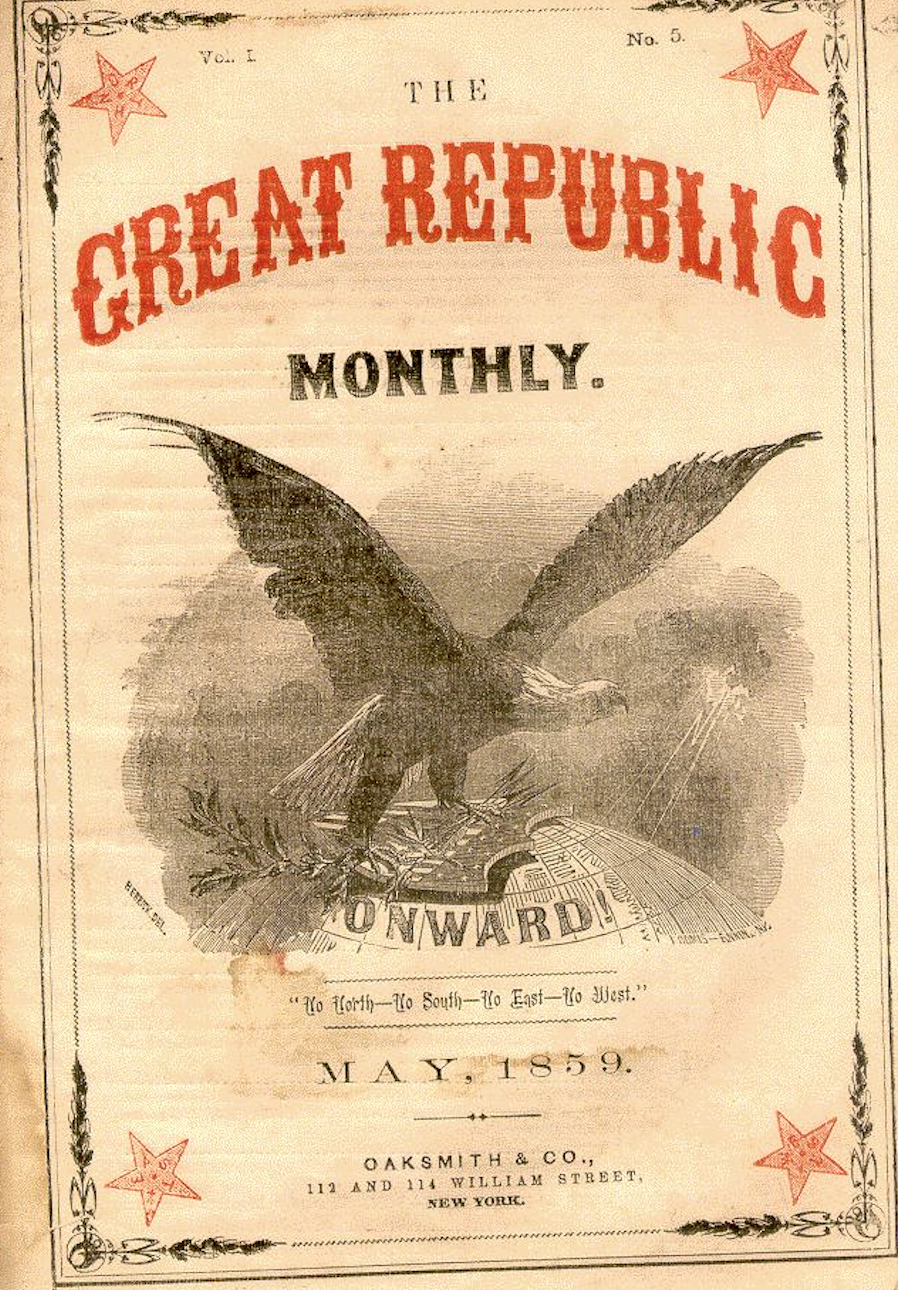
In the early 1850s, Smith ran a new series of Jack Downing letters in the Washington National Intelligencer and was hired as editor, once more, of several popular journals, The Weekly Budget (1852-1854), The United States Journal (1854-56), and finally Emerson’s United States Magazine, which combined with Putnam’s Monthlyin October 1857. This last publication featured art criticism by Edward Oakmsmith and numerous articles by Elizabeth Oakes Smith, and was carried on as the The Great Republic Monthly for the year 1859, published by Appleton Oaksmith, with its last issue published in November. In the 50s decade Smith also published a collection of his humorous stories, Way Down East, or Portraitures of Yankee Life (1854) and editions of his later Downing letters, My Thirty Years Out of the Senate (1852, 1859).
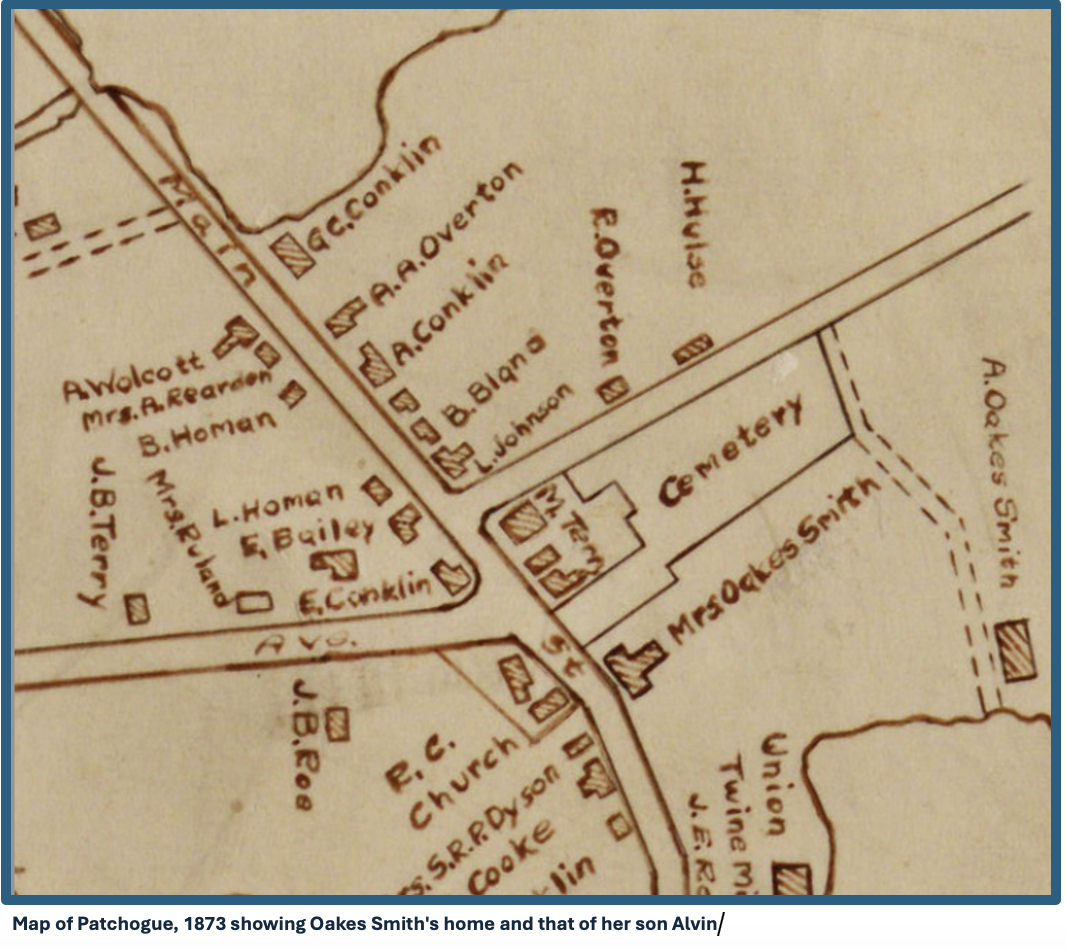
Soon after the demise of The Great Republic Monthly, Smith retired with his wife to Patchogue, Long Island, where they found and refurbished an old mansion they named “The Willows.” From his study Smith conducted extensive correspondence with friends and family and continued to inform himself on current affairs in his latter years. Any idea of a tranquil retirement was interrupted by his son Appleton’s arrest in November of 1861, on suspicion for equipping a slave ship for a wealthy merchant, Jacob Appley. With the right of habeas corpus suspended in the early years of the Civil War, Appleton was imprisoned in New York, then in Boston’s Charles Street jail for several months without access to legal counsel and with little evidence presented for his arrest. After a mysterious escape, the eldest son Smith had named after the President of his college fled to Cuba, then after some expeditions blockade-running for the Confederacy, made it to England, and never saw his father in person again.[3]
By 1865, Smith was almost constantly ill and suffered from near total deafness, but visitors often came to wish him well. Elizabeth Oakes Smith’s diary records his often moaning with pain, but also describes their playing chess in the evenings. His health failed completely in the summer of 1868, and he died on July 28. He was buried in the Old Willows cemetery in Patchogue, northwest of Patchogue lake, likely without a headstone. According to his wife’s letter to the Editors Literary Leaves Syndicate late in life, there was still “hardly a stone to his memory, except what was designed to be only a marking place where rest the ashes of a good and gifted man.”
According to William Bok’s article on Smith and his wife in the Patchogue Advance in the spring of 1900, the remains of both writers were transferred to Cedar Grove Cemetery in Patchogue when Old Willows cemetery was developed. It is still unclear when they were moved again to the present gravesite, only forty yards from the spot where their home “The Willows” once stood, off Main Street.
For Further Reading:
Smith, Seba. Autobiographic notes, 1858. Seba Smith Papers. Manuscripts Division, New York Public Library.
Rickels, Miton and Patricia. Seba Smith (Boston, Twayne Publishers, 1977).
Wyman, Mary Alice. Two American Pioneers: Seba Smith and Elizabeth Oakes Smith (New York: Columbia University Press, 1927).
NOTES:
[1] Literary historians agree Smith was the pioneer of this satiric model, which spawned numerous unauthorized works using Jack Downing’s moniker during the antebellum period, and later inspired Peter Finley Dunne’s “Mr. Dooley” columns in the 1890s, Langston Hughes “Jesse B. Simple” columns in the 1930s, and Mike Royko’s “Slats Grobnik” features in the 1970s and 80s, among many others.
[2] Two series of early letters between Seba Smith and his wife Elizabeth Oakes Smith, including both Seba Smith’s trip to Boston in 1833 and his ventures into the norther Maine in 1836 and 1837, are preserved in the archives of the Albert and Shirley Small Special Collections Library at the University of Virginia. They are available in print form as well, edited by Timothy H. Scherman in Elizabeth Oakes Smith: Selected Writings—Emergence and Fame, 1833-1849 (Macon: Mercer University Press, 2023).
[3] The full story of Appleton Oaksmith’s life has been meticulously researched and documented by Jonathan White in his book Shipwrecked: A True Civil War Story of Mutinies, Jailbreaks, Blockade-Running and the Slave Trade (New York: Rowman and Littlefield: 2023).
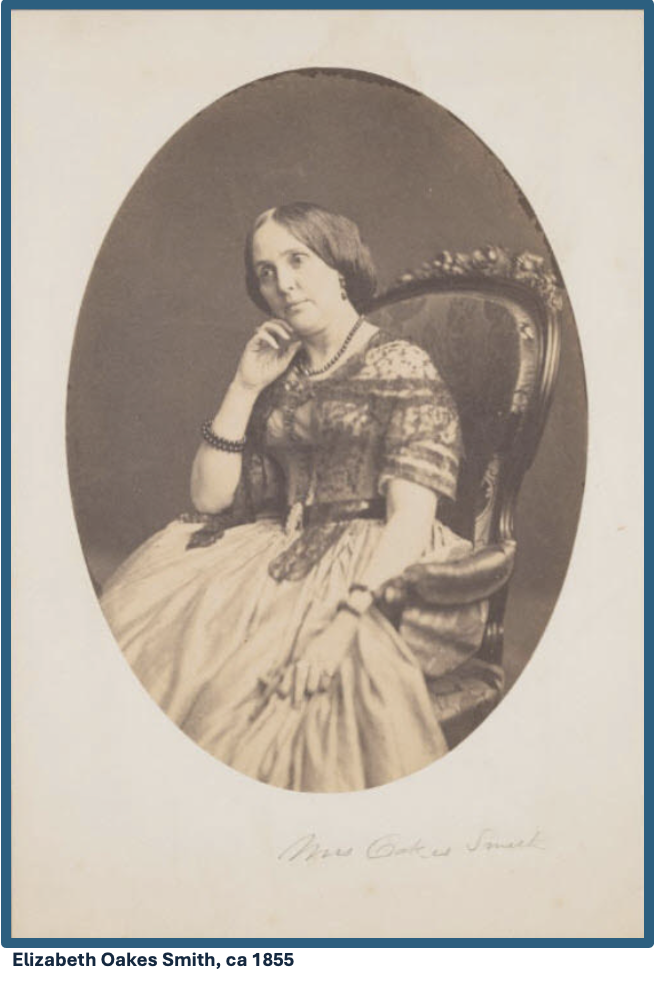
Born in North Yarmouth, Maine, some miles east of Portland, Elizabeth Oakes (Prince) Smith was the daughter of David Prince and Sophia Blanchard. Though she describes her childhood lyrically in her late autobiography (ca. 1885-1887), many of the bare facts of her life until her marriage in 1823 are still largely unknown or unverified. The fact that her existence remains largely a blank before she was married to Seba Smith at the age of sixteen might make this gravesite a spooky place to visit in the evening. No doubt she haunts it.
Oakes Smith (as she wrote her last name after 1842) was an immature bride and mother, and thus it may be unsurprising that Benjamin, the child she bore at the age of 17, survived only a month. Between 1825 and 1837, she had five more sons, four of whom lived to adulthood. Budgeting time for reading and writing even as she managed a large household, in the late 1820s she began to contribute poems and editorial to local publications including her husband’s journal, The Portland Daily Courier. In 1833, when Smith was in Boston to see his first collection of Jack Downing letters through the press, Oakes Smith took on editorial duties--which he very much appreciated, despite her own misgivings and over the objection of some men in the office.
ELIZABETH OAKES SMITH (1806-1893)
Both succeeded in placing their work, but by 1842, Oakes Smith’s reputation eclipsed her husband’s when her narrative poem “The Sinless Child” became a sensation. Soon she became one of New York’s most recognized and popular writers and circulated with figures such as Edgar Allan Poe, N.P. Willis, William Cullen Bryant, and Margaret Fuller in New York’s various literary salons. For popular journals, publishing Oakes Smith’s name on the masthead of this month’s issue was worth far more than they paid for her poems and stories. For her the 1840s were a period of furious productivity, when she described sending many works off to the press without even a second reading. Still, one can see behind many of her popular works a sense of her political sympathies—for Native Americans (The Western Captive, 1842), for the neurodivergent (“The Idiot,” 1843), and especially for women subject to the limits of patriarchal society (“The Defeated Life,” 1847, “Two Chapters on Beauty, Vanity and Marble Mantels,” 1848).
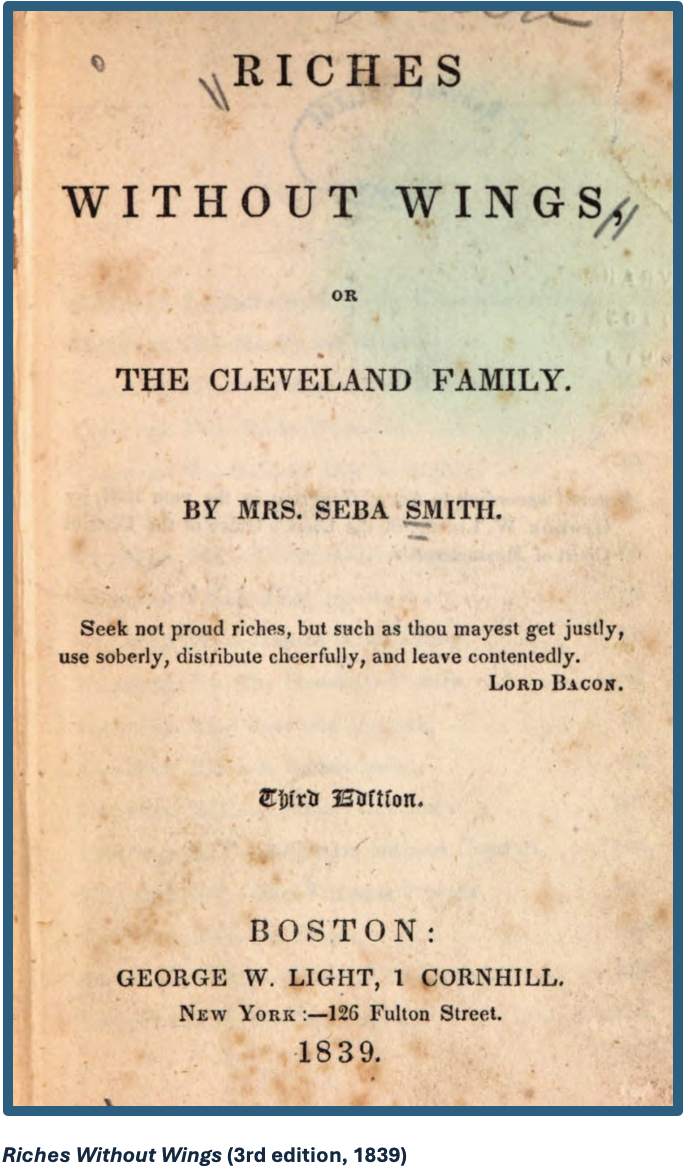
In 1837, when her husband lost his fortune speculating in land northwest of Bangor, Maine, Oakes Smith first encouraged him to build there, and “raise their sons to manhood” on what was then still undeveloped frontier, but she accepted his decision to move in with his family in Booth Bay, Maine. It was there she wrote her first novel, Riches Without Wings (1838), a moral tale aimed at victims of the Panic, which sold well. After a year’s residence in South Carolina, where her husband tried and failed to recoup his fortune selling a cotton-cleaning invention, the family ended up in New York City, boarding with her cousins. With now four sons between two and ten years of age (one son, Rolvin, had died in the aftermath of a scalding accident in 1832), Oakes Smith and her husband set to work as professional writers, contributing to popular journals cropping up in major cities up and down the eastern seaboard.
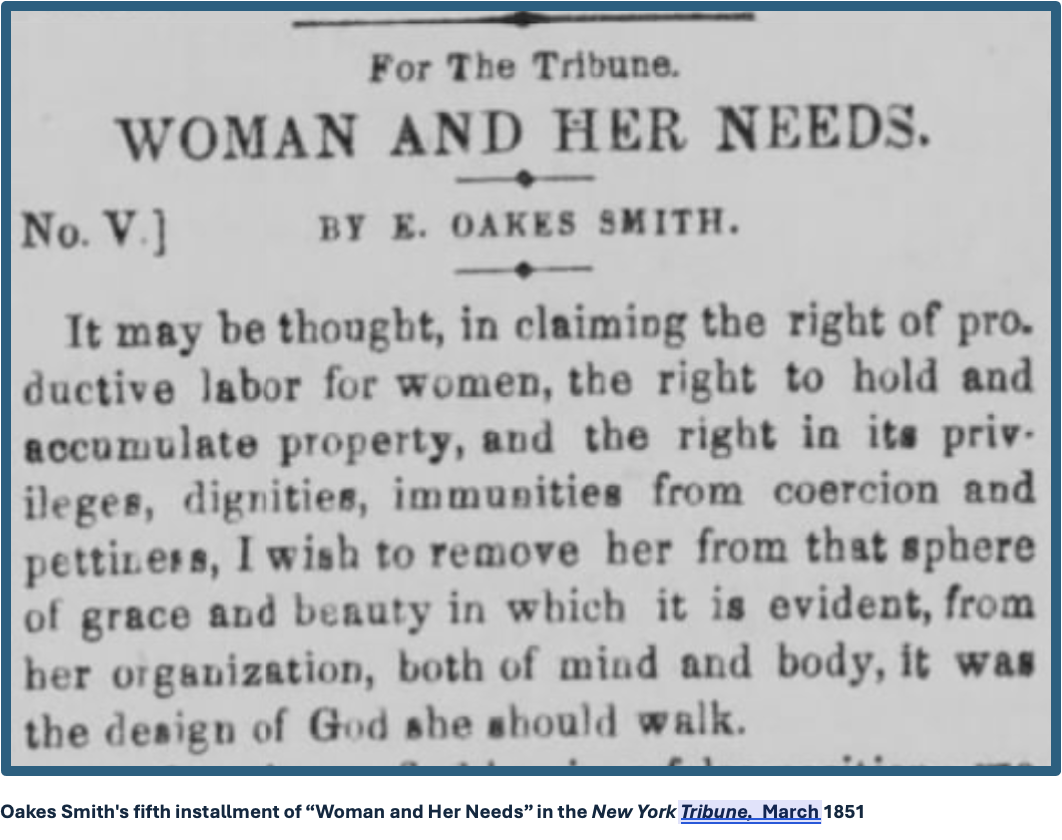
In 1849, after returning from a vacation climbing Katahdin, Maine’s highest peak, she declared to friends that she was wearied of pleasing the market for work informed by the demand for popular themes and styles. Having followed the news coverage of the early woman’s rights movement, and inspired by Margaret Fuller’s example, she shifted her focus from literary to political work, publishing her major feminist treatise Woman and Her Needs serially in the New York Tribune, reaching well over 100,000 readers. Though she was not in attendance at the first woman’s rights convention in Seneca Falls, NY in 1848, she attended and spoke at National Woman’s Rights Conventions from 1850 well into the late 1870s, and with Paulina Wright Davis, inaugurated the first woman’s rights journal. Her prominence as a public figure led to her nomination as President of the National Woman’s Rights Convention at Syracuse in 1852, though conservatives balked, questioning the propriety of the dress she wore—an incident representative of a trend she had contemplated that same year in a treatise on women’s dress and its social relations.
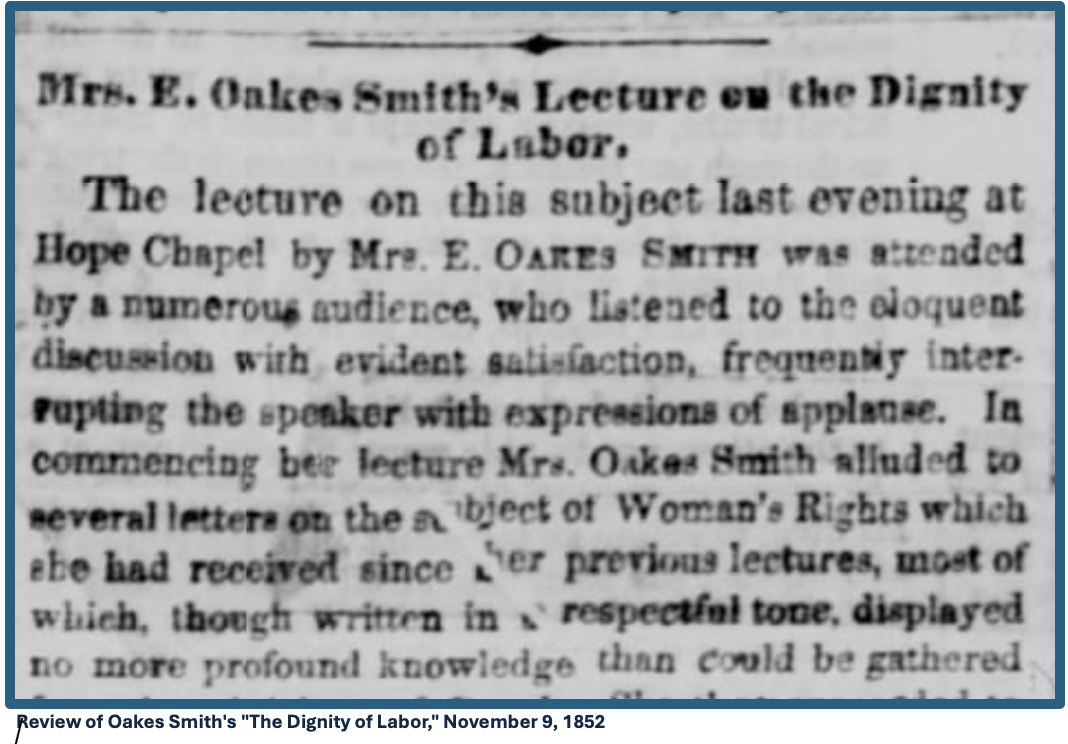
At the same time as she issued pamphlet editions of Woman and Her Needs, Hints on Dress and Beauty and Shadowland, or The Seer (an autobiographical treatise on spiritualism), with radical publishers Fowler and Wells, Oakes Smith moved her work to the public stage, bypassing the strictures of conservative publishers and bringing what she called her “doctrines” to public audiences across the country on the Lyceum circuit. Couching her feminist themes in philosophical or historical guise (the Lyceum prohibited political speeches), from her first lecture at Hope Chapel in New York City in June of 1851, she quickly expanded her lecture trips from the Boston, New York and Providence to the western cities of Cleveland, Louisville, and Chicago the following year, and prepared new lectures, for example, on “The Dignity of Labor,” and “Representative Women,” for subsequent tours.
Oakes Smith’s lucrative lecture career was cut short by exhaustion in 1857, and soon after, her son Appleton’s indictment for equipping a slave ship made her an easy target for those threatened by her radical positions on social justice, temperance and woman’s rights. Living in rural Patchogue until her husband’s death in the late 1860s, she continued to contribute to popular journals after the Civil War, publishing chapters of her autobiography beginning in 1861. Though she never regained the reputation that led journals to place her name near the top of magazine advertisements in the mid-40s, she stayed active well into her eighth decade, living alternately between her son’s home in North Carolina and Patchogue from 1874 until her death.
At the age of 71, Oakes Smith was invited to serve as a minister to the Independent Church in Canastota NY, where many of her lecture themes returned in her weekly sermons. She continued drafting historical novels and speculative fiction into the late 1880s, including The Two Wives, serialized in The Herald of Health from January to October 1870 (what modern readers might consider a cross between Thurber’s twentieth century story, “The Secret Life of Walter Mitty” and Spielberg’s Indiana Jones and the Temple of Doom) and “The Amazons of Mexico”(1877), a three-chapter fragment of a utopian novel imagining a woman-centered society.
Oakes Smith died November 15, 1893 in North Carolina. Her body was transported to Patchogue for burial next to her husband, though records remain unclear where she was originally buried, whether her remains were moved, or who placed the stone to her memory you see here.
For the latest portrait of Oakes Smith, visit Rafael Algerin’s mural “Knowledge is Power” on the wall of the Patchogue-Medford Library downtown. For much more information and to read many linked texts by EOS, proceed to the full website.
About the Gravesite:
In the later 20th century, vandals (or perhaps those who remembered her fight against alcohol) smashed Oakes Smith’s headstone in two, and for many years, the gravesite was completely uncared-for. Its recent repair and restoration was coordinated by Patchogue residents associated with the Friends of Lakeview Cemetery. The bench you may be sitting on was installed in 2025 by the Elizabeth Oakes Smith Society, the squirrel details providing a reference to her story published in the Portland Transcript late in life titled “Chippy,” one of the many animals she kept in her home, including a favorite macaw named “Montezuma.”